

ALPHA Serisi
Creaqua Alpha Series
More Than Lighting: The Engineering Behind Every Decision
The Creaqua Alpha Series was not designed simply to be a powerful aquarium light. It was engineered
to be a long-lasting, balanced, efficient, and fully controlled lighting system, where every component and every decision serves performance, reliability, and consistency.
From the very first design stage, each engineering choice directly shaped the final product.
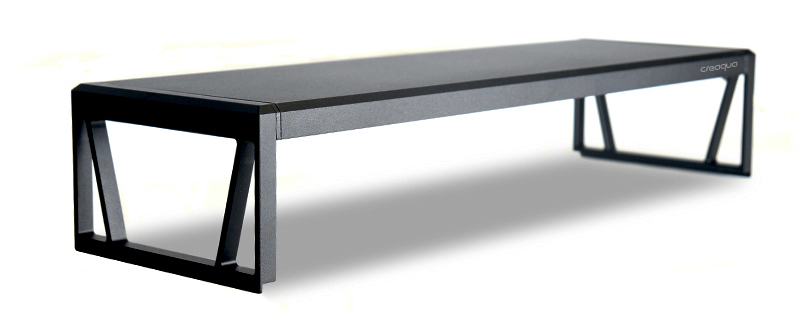
LED Selection: Accuracy Before Color
In the Alpha Series, we deliberately chose pure RGB LEDs without integrated white. The reason is straightforward yet critical:
When it comes to light quality, stability, and efficiency, SMD white LEDs offer a far broader and more controllable performance range.
For this reason, the Alpha Series uses white LEDs with:
-
- High Efficiency (HE) up to 240 lm/W,
-
- CRI 93, 6500K color temperature,
-
- Premium-grade optical and electrical stability.
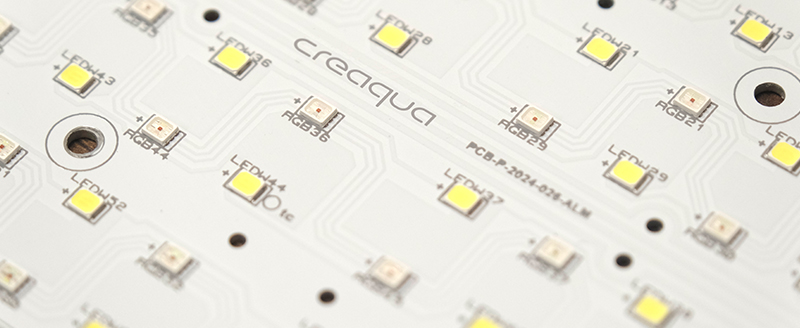
These white LEDs are registered with EPREL (European Product Registry for Energy Labelling) and meet DLC Premium – Class A standards.
This certification represents not only high efficiency, but also verified quality, consistency, and long-term reliability.
This LED choice influenced every subsequent design decision — from the aluminum housing and thermal structure to the power supply and cable specifications.
RGB Precision: Control at the Nanometer Level
RGB LEDs are not commonly used in general lighting applications due to their inherently lower luminous efficiency. As a result, RGB+W aquarium lighting systems are naturally constrained in efficiency.
Despite this limitation, the RGB LEDs used in the Alpha Series are custom-manufactured to ensure:
-
- Extremely low color deviation,
-
- Balanced and stable output across all RGB channels.
Color deviation is a critical parameter. Each RGB channel must emit light at precise nanometer (nm) wavelengths to reproduce accurate colors.
While many commercially available RGB LEDs exhibit wavelength deviations of up to 8 nm, the RGB LEDs used in the Alpha Series are limited to a maximum deviation of just 2 nm.
In addition, these LEDs deliver higher real-world lm/W efficiency than the marketing specifications of most standard RGB SMD LEDs on the market.
What lm/W Really Means to Us
For most users, lm/W is simply an indicator of energy efficiency. For us, it represents how much of the consumed energy is converted into light, and how much is lost as heat.
A high lm/W LED chip enables:
-
- Lower operating temperatures,
-
- More stable light output,
-
- Significantly longer LED lifespan.
This data defines critical design decisions:
-
- How the aluminum housing should be structured,
-
- Whether cooling channels are required,
-
- Whether passive cooling is sufficient or active cooling is necessary,
-
- How to ensure silent operation if a fan is ever used.
Beyond LED quality, LED quantity and layout play a decisive role in overall efficiency. Leveraging our experience in professional lighting design,
we developed an optimized LED arrangement that maximizes usable light output. At this stage, PCB quality was selected with both performance
and cost-efficiency in mind.
PCB Design: The Foundation of Longevity
PCB selection is not merely an electrical choice — it is a thermal and mechanical one as well.
For the Alpha Series, we prioritized PCB materials based on:
-
- Dielectric constant,
-
- Dissipation factor,
-
- Glass transition temperature (Tg),
-
- Thermal conductivity.
We intentionally selected PCB quality beyond minimum requirements to ensure long-term stability.
Component placement was designed with careful consideration of signal integrity, power distribution, and thermal management. After SMD assembly, each PCB undergoes:
-
- EMI (Electromagnetic Interference) testing,
-
- Signal integrity validation,
-
- Power distribution analysis,
-
- Thermal performance testing.
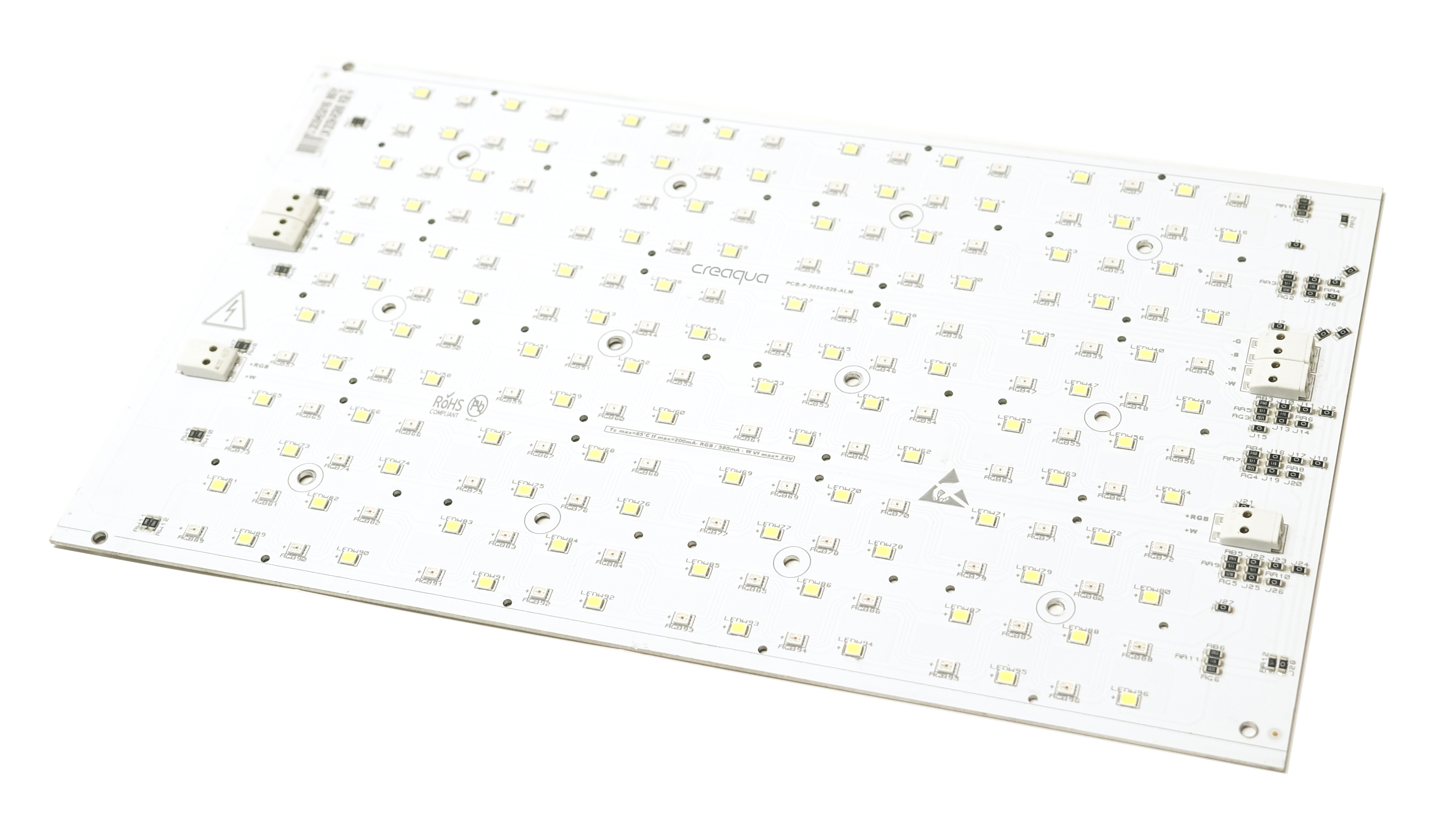
Performance Verified by Measurement
Before becoming a finished product, every Alpha Series PCB undergoes comprehensive optical testing.
Each channel is measured:
-
- Individually,
-
- At multiple power levels,
-
- Using integrating sphere measurements.
These tests precisely determine:
-
- Luminous flux,
-
- Luminous efficacy,
-
- Correlated color temperature (CCT),
-
- Color Rendering Index (CRI),
-
- Exact wavelength values (nm) for monochromatic LEDs.
These results define the required cooling capacity and form the starting point of the aluminum housing design.
Aluminum Housing: Silent Strength
The housing design balances:
-
- Aesthetic refinement,
-
- Ease of assembly,
-
- Structural durability,
-
- Material efficiency,
-
- Thermal performance.
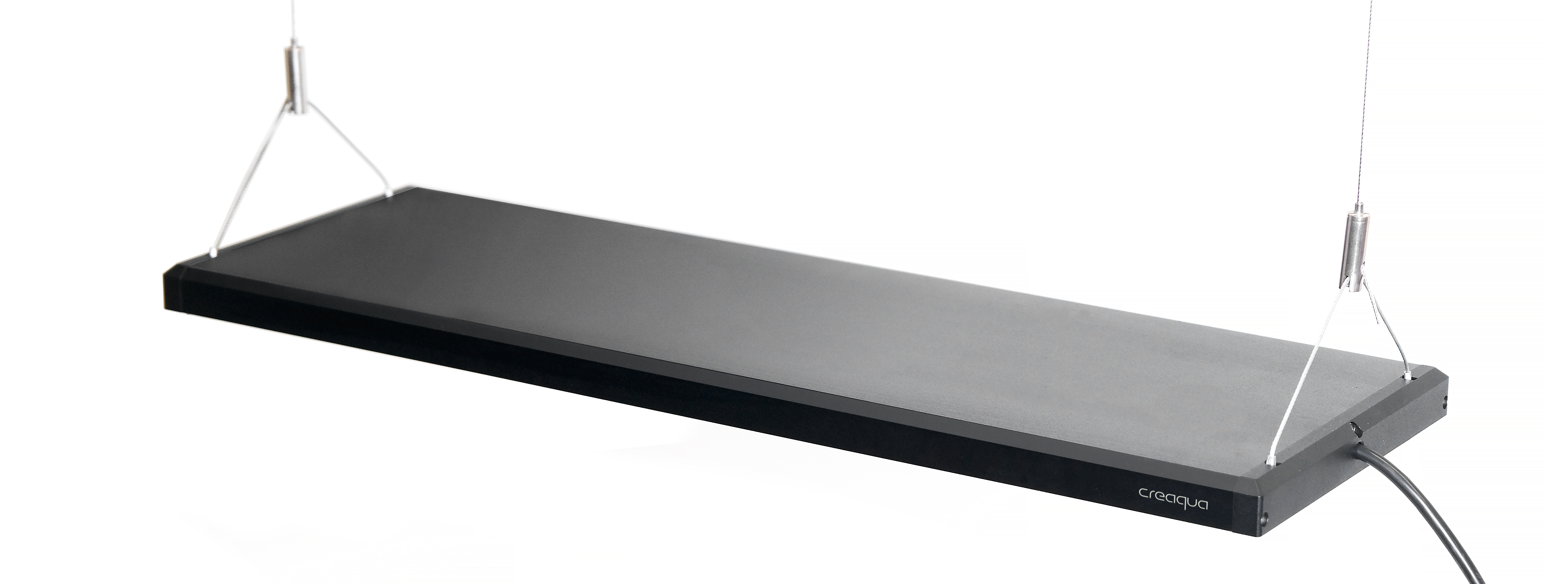
Once the design was finalized for extrusion, initial samples were produced and demo units assembled. Thanks to the engineering decisions made up to this
stage, the Alpha Series delivers higher output with lower operating temperatures and exceptionally balanced light distribution compared to
competing products.
No external cooling fins or active cooling were required. The housing is finished with high scratch-resistance static powder coating, rather than
conventional anodizing.
Lens Philosophy: Directing Light Where It Matters
Creaqua prefers the use of lenses in most of its lighting series. The reason is straightforward:
Light produced for an aquarium that spills outside the tank represents inefficiency.
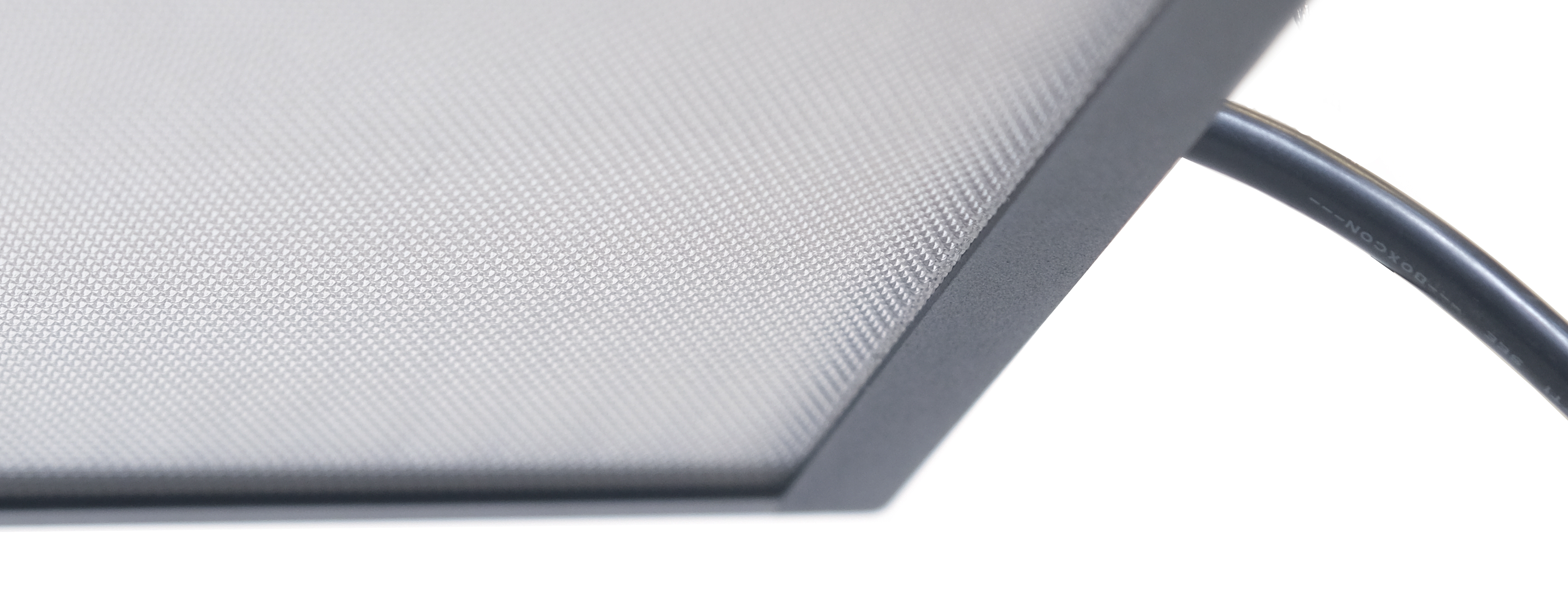
SMD-form LEDs typically have a beam angle of approximately 120°. In the Alpha Series, this wide distribution is brought under control through specially designed optical components, with the aim of directing the light more precisely and using it more efficiently. The resulting photometric distribution has been verified through goniophotometric measurements conducted in accredited laboratories.
The advanced micro-prismatic lens structure used ensures homogeneous mixing of the different wavelengths emitted by the RGB + W LEDs. In this way, a balanced spectrum is delivered to the aquarium with high efficiency and visual comfort, without causing glare.
Smart Control: BlueHub Ecosystem
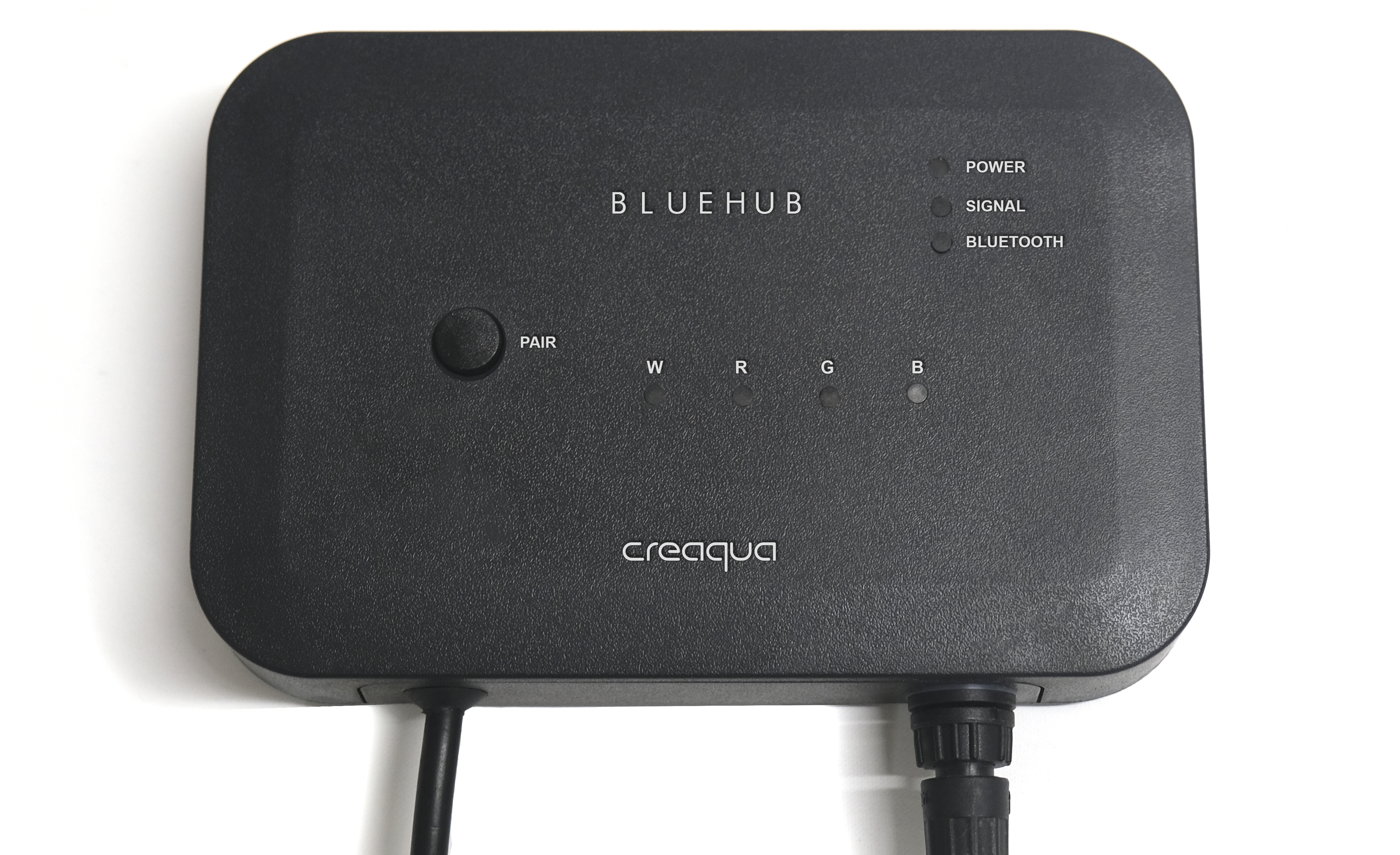
Unlike conventional plug-and-play lighting, the Alpha Series is fully controllable via Bluetooth using iOS and Android devices. This required the
development of a dedicated electronic control unit separate from the LED PCB.
To achieve lower temperatures and extended lifespan, the control electronics were intentionally placed outside the lighting housing.
The BlueHub control board features:
-
- A powerful main processor,
-
- Four dedicated processors generating 5000 Hz PWM signals for each channel,
-
- An integrated RTC (Real-Time Clock) to retain all settings even during prolonged power outages.
The mobile application allows:
-
- Independent time schedules for each RGB + W channel,
-
- Custom ramp times and intensity curves,
-
- Preset profiles and user-defined libraries.
This platform is designed as a unified Creaqua ecosystem. Future devices such as aquarium computers, chillers, temperature and TDS meters, RGB
backlights, and dosing pumps will be controllable — and synchronizable — from a single interface.
Mechanical Details: Built for Durability
All suspension hardware and mounting rods are manufactured from stainless steel.
Suspension caps and adjustable mounting legs are CNC-machined from 6061 aluminum and finished with static powder coating.
Special gaskets prevent light leakage between housing components.
The extendable mounting rails are reinforced with integrated gaskets to eliminate slipping or accidental movement.
The Reason Behind the 3-Year Warranty
The Alpha Series is not defined by specifications alone, but by a measured, tested, and validated engineering process.
For this reason, the 3-year warranty is not a marketing claim — it is a direct result of how the Alpha Series is designed and built.
Only authorized members can post comments