
An Introduction to Reef Lighting for Soft Corals
Reef Aquarium Lighting: The Right Approach for Soft Corals
In reef aquariums, lighting goes beyond aesthetics and directly influences the metabolic processes of corals. Zooxanthellae algae living within coral tissue perform photosynthesis and provide a significant portion of the coral’s energy demand. For this reason, light functions as a direct metabolic parameter in reef systems.
One of the most common mistakes is applying freshwater planted aquarium logic to marine systems. Lumen output, wattage, or a white-dominant spectrum are not reliable reference points for reef tanks. Reef lighting should be evaluated based on PAR intensity, spectral distribution, and particularly blue-band dominance.
In this article, we focus specifically on the correct lighting approach for soft corals.
What Are Soft Corals?
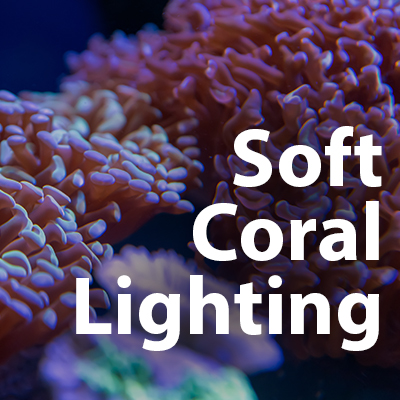
Soft corals (Sarcophyton, Sinularia, Zoanthus, Xenia, etc.) do not form rigid calcium carbonate skeletons. Compared to SPS species, they generally require lower light intensity and less aggressive flow.
This makes them more forgiving, but it does not mean they thrive under arbitrary lighting conditions.
If light is insufficient:
- Polyp elongation increases (stretching)
- Color loss may occur
- Growth slows down
Under excessive light:
- Tissue contraction
- Color fading (early bleaching signs)
- Polyp retraction
Therefore, the objective is not maximum power, but stable lighting within the correct range.
Spectrum: Why Blue Dominance?
In reef environments, photosynthetic activity is most efficient within the 400–480 nm range. In particular:
- 420–450 nm (royal blue)
- 450–470 nm (blue)
These bands serve as the primary energy source for zooxanthellae.
The white channel contributes to visual balance, fluorescence control, and spectral completeness. However, a white-heavy or yellow-dominant light profile is not representative of natural reef conditions.
In tropical waters, red and yellow wavelengths are rapidly absorbed with depth, while blue penetrates further. Blue dominance in reef aquariums therefore aligns with biological reality.
PAR Range for Soft Corals
Soft corals typically demonstrate stable growth within:
50 – 120 µmol/m²/s PAR
This range:
- Is lower than typical SPS requirements
- Can approach the upper range of some LPS species
- Is ideal for lower-energy, stability-focused systems
Uniform distribution is more important than peak intensity. Narrow optics that create hotspots are unnecessary for soft coral systems.
Photoperiod
A typical photoperiod for soft coral systems includes:
- 8–10 hours of main lighting
- 30–60 minutes ramp-up
- 30–60 minutes ramp-down
Abrupt on/off transitions create stress. Smooth transitions, particularly in the blue channel, directly influence polyp behavior.
Why Light Intensity Must Be Controlled
Increasing light intensity in a reef aquarium does not produce linear benefits. Instead:
- Low nutrients + high light = tissue stress
- Insufficient flow + high light = algae pressure
- Low nitrate/phosphate + high PAR = bleaching risk
In soft coral systems, the objective is biological stability rather than maximum output.
Reef Lighting with RGBW Fixtures
When properly configured, RGBW fixtures provide significant advantages for reef aquariums:
- The blue channel acts as the primary photosynthetic driver
- The white channel ensures spectral balance
- Red and green channels serve as minor supportive components
- Channel-level control allows precise system optimization
The critical factor is configuring channels based on biological requirements rather than visual preference.
In the next article, we will share measurement-based RGBW preset values and practical scenarios specifically designed for soft corals.
Click here for the ALPHA RGBW Marine Setup and Simulation Guide.
Only authorized members can post comments