
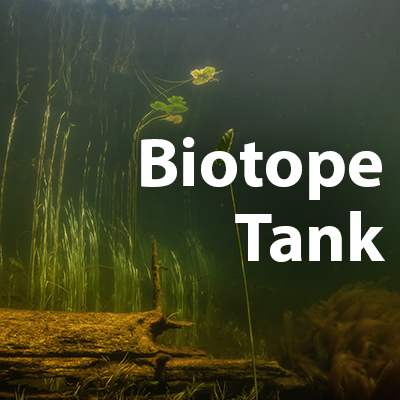
What is a Biotope Aquarium?
What Is a Biotope Aquarium?
A Controlled Replica of a Natural Habitat
A biotope aquarium is a setup approach that aims to recreate, as accurately as possible, the physical, chemical, and biological conditions of a specific geographic habitat found in nature. The goal is not merely to keep certain fish together. The real objective is to model the habitat’s water chemistry, light character, substrate structure, flow dynamics, and plant presence as a coherent system. For this reason, a biotope aquarium is not an aesthetics-first design, but an ecology-referenced system concept.
The biotope topic is extremely broad and covers hundreds of habitats worldwide. In this article, instead of attempting to cover every biotope type, we will focus on four major South American river systems that are widely referenced in the aquarium world:
- Rio Negro
- Rio Tapajós
- Rio Tocantins
- Rio Xingu
These systems differ clearly in both water chemistry and visual identity, and they can be modeled successfully in an aquarium with the right technical approach. However, there is a critical detail: in these rivers, many “aquarium plants” are not true submerged aquatic plants in nature. Especially in seasonally flooded forests (igapó), submerged terrestrial plants, sunken leaves/branches, and floating plants form a large part of the biotope atmosphere. The summaries below present the water parameters, native plants, and a few well-known representative aquarium fish species together.
Core Parameters in a Biotope
In a biotope setup, fundamentals such as pH, conductivity, temperature, and water type are not “decorative choices”—they define the biological boundaries of the system. The correct parameter range directly affects fish behavior, stress levels, breeding potential, and even how light is perceived inside the tank.
Rio Negro (Blackwater)
Rio Negro is one of the most extreme examples of true blackwater. Because of its very low conductivity and highly acidic pH range, true submerged aquatic plants are extremely limited. The biotope atmosphere is typically defined by seasonally flooded igapó forests, submerged branches, and dense organic leaf litter. In the aquarium hobby, the “Rio Negro look” is strongly associated with small schooling tetras and blackwater-adapted cichlids.
Water Parameters
| Parameter | Value |
|---|---|
| pH | 2.9 – 5.0 (highly acidic) |
| Conductivity | 8 – 20 µS/cm |
| Temperature | 27 – 30°C |
| Water Type | Blackwater |
Native Plants
- Myriophyllum sp. (very rare)
- Utricularia species
- Salvinia auriculata
- Limnobium laevigatum
Key Aquarium Fish
| Common Name | Scientific Name | Notes |
|---|---|---|
| Cardinal Tetra | Paracheirodon axelrodi | The river’s “icon fish” and one of the most popular aquarium species |
| Discus | Symphysodon spp. | Blackwater specialist, high-value species |
| Diptail Pencilfish | Nannostomus eques | Schools near the surface |
| Checkerboard Cichlid | Dicrossus maculatus | Bottom dweller; forages in leaf litter |
| Splash Tetra | Pyrrhulina sp. | Surface feeder |
Rio Tapajós (Clearwater)
Rio Tapajós is known for its clearwater character. Although the pH range can be broad, most practical references emphasize the 6.0–6.8 band. Even so, the river is generally plant-poor; its biotope identity is often represented by open substrate, clarity, and a few region-specific endemic plant species. In the aquarium hobby, Tapajós is commonly associated with earth-eater cichlids (Geophagus) and schooling fish.
Water Parameters
| Parameter | Value |
|---|---|
| pH | 4.5 – 7.8 (typically 6.0 – 6.8) |
| Conductivity | 14 – 20 µS/cm |
| Temperature | 26 – 28°C |
| Water Type | Clearwater |
Native Plants
- Syngonanthus macrocaulon (Tonina sp. “Belem” – endemic)
- Staurogyne stolonifera
- Hedyotis salzmannii
- Limnobium laevigatum
Key Aquarium Fish
| Common Name | Scientific Name | Notes |
|---|---|---|
| Tapajós Earth-eater Cichlid | Geophagus sp. “Tapajos” | Region-linked earth-eater cichlid |
| Tapajós Tetra | Hyphessobrycon sp. | A schooling fish associated with clearwater habitats |
| Red Neon / Local Cardinal Variant | Paracheirodon axelrodi (local variant) | Known for local color variations |
| Severum (“Parrot Fish” in trade) | Heros spp. | Large-bodied regional cichlids |
| Pencilfish | Nannostomus spp. | Surface-oriented, calm schooling fish |
Rio Xingu (Clearwater)
Rio Xingu is a clearwater river known for its fast flow and rocky structure. This flow regime limits typical aquatic plants, but the river hosts many endemic Podostemaceae “riverweed” species in waterfalls and high-current rocky zones. In the aquarium world, Xingu is strongly associated with iconic plecos that live under rocks and several current-adapted cichlids.
Water Parameters
| Parameter | Value |
|---|---|
| pH | 6.0 – 7.5 (typically 6.5) |
| Conductivity | 10 – 20 µS/cm |
| Temperature | 26 – 31°C |
| Water Type | Clearwater |
Native Plants
- Castelnavia princeps (endemic riverweed)
- Mourera weddelliana (endemic)
- Apinagia sp. (endemic)
- Eleocharis sp. “Xingu”
Key Aquarium Fish
| Common Name | Scientific Name | Notes |
|---|---|---|
| Zebra Pleco | Hypancistrus zebra | The iconic species; lives under rocks |
| Gold Nugget Pleco | Baryancistrus xanthellus (L018/L081/L177) | One of the most common Xingu plecos in the trade |
| Leopold Stingray | Potamotrygon leopoldi | One of the most striking freshwater stingrays |
| Retroculus | Retroculus xinguensis | Current specialist; up to ~38 cm |
| Xingu Pike Cichlid | Crenicichla spp. (C. dandara, C. anamiri, etc.) | Endemic pike cichlids |
Rio Tocantins (Clearwater)
Among these four systems, Rio Tocantins stands out with comparatively higher conductivity (mineral content). This can support a somewhat richer plant presence, but hydroelectric dams in the basin can place significant pressure on habitat integrity. In the aquarium hobby, Tocantins is often linked to regional endemic pike cichlids, along with several tetra and pleco species.
Water Parameters
| Parameter | Value |
|---|---|
| pH | 6.2 – 7.4 (typically 7.0 – 7.2) |
| Conductivity | 38 – 52 µS/cm (higher than the others) |
| Temperature | 28 – 30°C |
| Water Type | Clearwater |
Native Plants
- Echinodorus amazonicus
- Echinodorus spp. (various local species)
- Hydrocotyle spp.
- Salvinia spp.
Key Aquarium Fish
| Common Name | Scientific Name | Notes |
|---|---|---|
| Tocantins Endemic Pike Cichlids | Crenicichla spp. | Region-linked pike cichlids |
| Tocantins Tetra | Astyanax elachylepis | Endemic tetra species |
| Tocantins Leporinus | Leporinus spp. (local endemics) | Known for striped forms |
| Tocantins Pleco | Hypostomus ericae | Endemic armored catfish |
| Tocantins Myleus | Myleus spp. | Regional paku-like species |
Summary Table
| River | Water Type | pH | Most Popular Aquarium Fish | Conservation Note |
|---|---|---|---|---|
| Rio Negro | Blackwater | 2.9 – 5.0 | Cardinal Tetra | Sustainable harvest |
| Rio Tapajós | Clearwater | 6.0 – 6.8 | Tapajós Earth-eater Cichlid | Dam pressure |
| Rio Xingu | Clearwater | 6.0 – 7.5 | Zebra Pleco | Critical (Belo Monte dam) |
| Rio Tocantins | Clearwater | 6.2 – 7.4 | Tocantins Endemics | Dam pressure |
Important note: Especially Hypancistrus zebra (Zebra Pleco) and other endemic species in Rio Xingu face habitat-loss pressure due to the Belo Monte hydroelectric dam, and they appear on the IUCN Red List.
Light Management in a Biotope
In biotope systems, light does more than ensure visibility—it defines the optical identity of the water. In blackwater, high tannin concentration and acidic chemistry create a more “filtered” visual perception of light, so controlled intensity and a softer spectral character are preferred. In clearwater rivers, clarity produces sharper shadows and higher visibility. The goal of biotope lighting is therefore not maximum lumen output, but a spectral character and controlled intensity that carry the habitat’s atmosphere correctly.
Ready-Made Rio Presets with ALPHA RGBW
For Rio Negro, Rio Tapajós, Rio Tocantins, and Rio Xingu, we prepared ready-made ALPHA RGBW lighting presets. The channel percentages and measurement results are shared in a separate technical article. To simulate these habitats with the correct spectral character and to view the measurement-verified settings, you will be directed to the preset guide.
Only authorized members can post comments